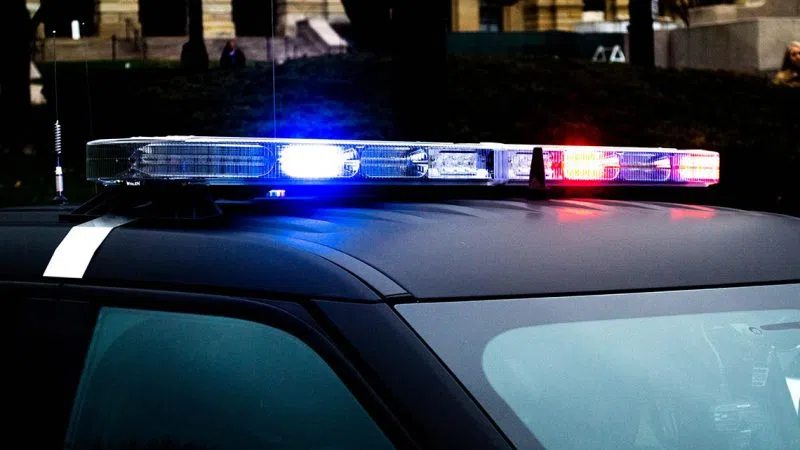
Ahead of a tense session of City Council on March 18, a long line of motorcycles sat parked outside of Municipal Center West. Inside the city offices, law enforcement presence around the council chamber was roughly triple what it is at ordinary council sessions, with the city anticipating extensive turnout and an exhaustive list of public speakers.
The display outside the building was orchestrated by motorcyclist advocates, seeking to deliver a message to the city following the publication of the Springfield Police Department’s Internal Affairs investigation into the mishandling of a September 5 crash: an intoxicated retiring SPD sergeant, Michael Egan, failed to stop for oncoming traffic at an intersection and, as he attempted to make a turn, drove into the path of a motorcycle carrying Springfield community members Chelsey Farley and Trevor Hopkins.
In the fallout of the accident, protestors accused the city of covering up misconduct on the part of involved officers and shielding Egan from justice; in a grueling Committee of the Whole meeting the following Tuesday, community speakers told the city again and again that the incident reeked of corruption and police favoritism.
A.B.A.T.E. of Illinois representative Josh Witkowski, speaking on behalf of the motorcyclists who demonstrated outside, told the council that the crash was far from an isolated incident: “In the eight years that I have been at this level, we dealt with a Springfield police officer who threatened a motorcyclist with jail time if they didn’t turn over personal property – namely, a GoPro camera. We dealt with an officer who targeted riders so heavily, aggressively, chased them, would follow them for miles on end, that the riders started putting a single scout on him and would go to the other side of town. We dealt with an officer trying to claim that a bike was stolen when it was not… he just didn’t know how to read that particular bike’s VIN.
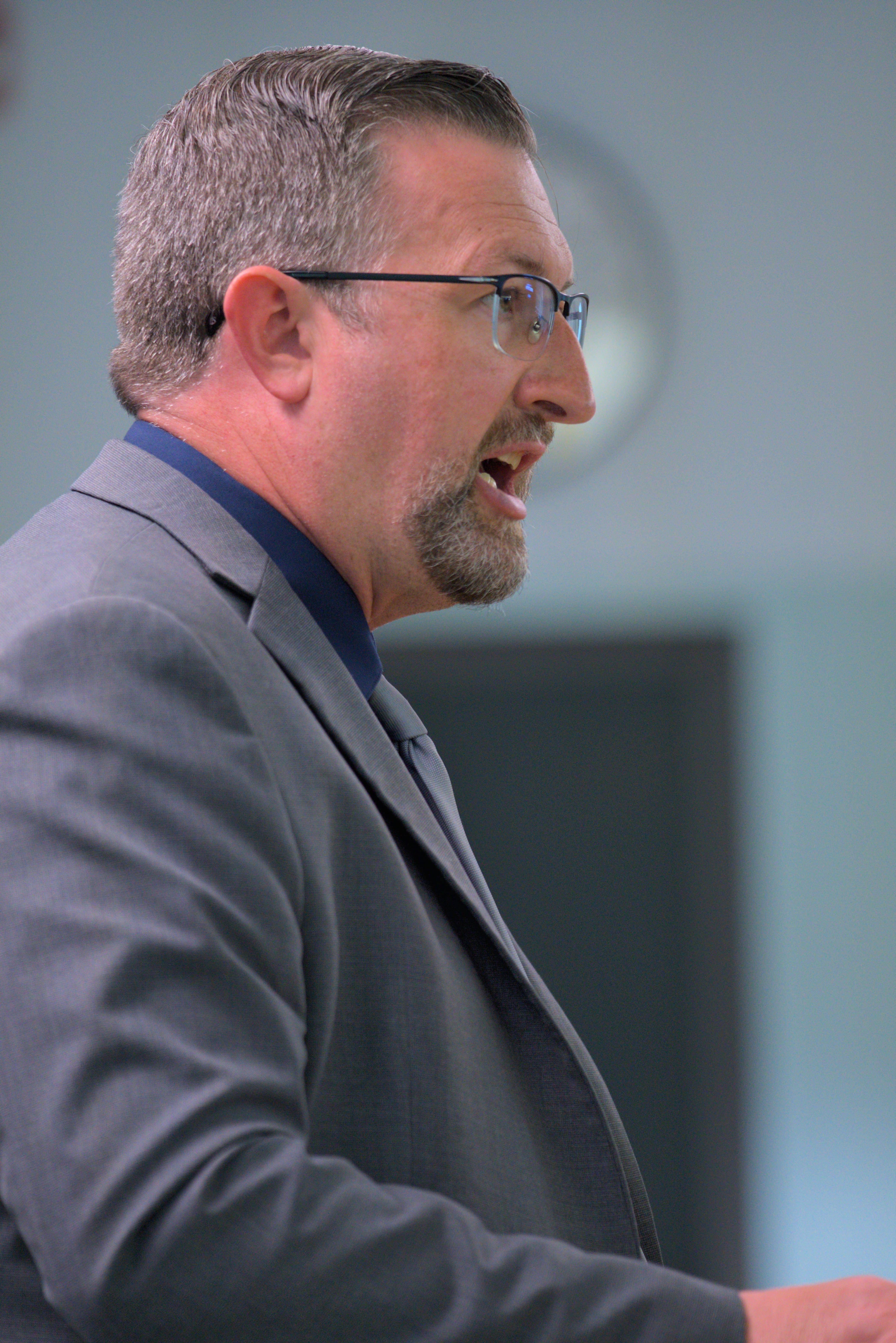
“We had an instance where, déjà vu! A city employee jumped a curb, hit a motorcycle that was at a shaved ice place, and lo and behold police said, ‘Hey, he’s just celebrating his retirement,’ and that got swept away. Four of those incidents never made it to Council, because the four people involved were too scared to come address Council, or have it addressed publicly.”
A witness to Egan’s collision, Witkowski told the city, wept to him in two separate meetings because he feared retaliation by the Springfield Police. “We shouldn’t be afraid of our police. What we saw in that video was a double standard.”
Four of the SPD officers who responded to the incident with Sgt. Egan received discipline pursuant to the department’s investigation: scene supervisor Sgt. Andy Zander was suspended for a total of six days while three of his subordinates were issued written reprimands for their misconduct. All four officers were ordered to undergo police retraining.
Many attendees of Tuesday’s meeting deemed the consequences insufficient.
Alders Jennifer Notariano of Ward 6 and Shawn Gregory of Ward 2 both stressed to SPD Chief Ken Scarlette that the department’s punishments could not be the end of the discussion, that more work was necessary to prevent such an incident and to improve the public perception of the police.
Tempers repeatedly flared throughout the council meeting. Members of the public repeatedly railed against the double standard Witkowski had mentioned. In the released bodycam footage, Michael Egan is seen lounging by his car, peering at the mess in the road, reminding officers of his identity whenever they approach to ask for his statement; anyone else, Tuesday’s speakers reminded the city, would have been in the back of a squad car and on their way to receive a blood draw.
The most dire criticism of the city’s handling of the crash was leveled by Caitlyn Weiss — the sister of Chelsey Farley.
“I appreciate you guys letting me speak so long last time — it felt like we were gonna have effective change and accountability, from what was going on,” said Farley, cradling her newborn baby as she spoke, “but it doesn’t look like that’s what we’re seeing. It’s super obvious: everybody here knows [the bodycam video] doesn’t look like ‘being treated like a citizen.’
“And which did you guys want? Because you didn’t want it to be that he was an officer, because that looks worse. You had to know that he had been retired ‘a few hours’ ahead of the accident. So was he a citizen, or an officer? And why did they treat him so kindly at the scene? I too have had a DUI, when I was 21, and they took right down to Saint’s and got my blood the way they did Egan’s. But it didn’t take from 9:30 when he hit my sister until 2 in the morning, and then, you know – so many days later until actually arresting him and taking him down to the court.”
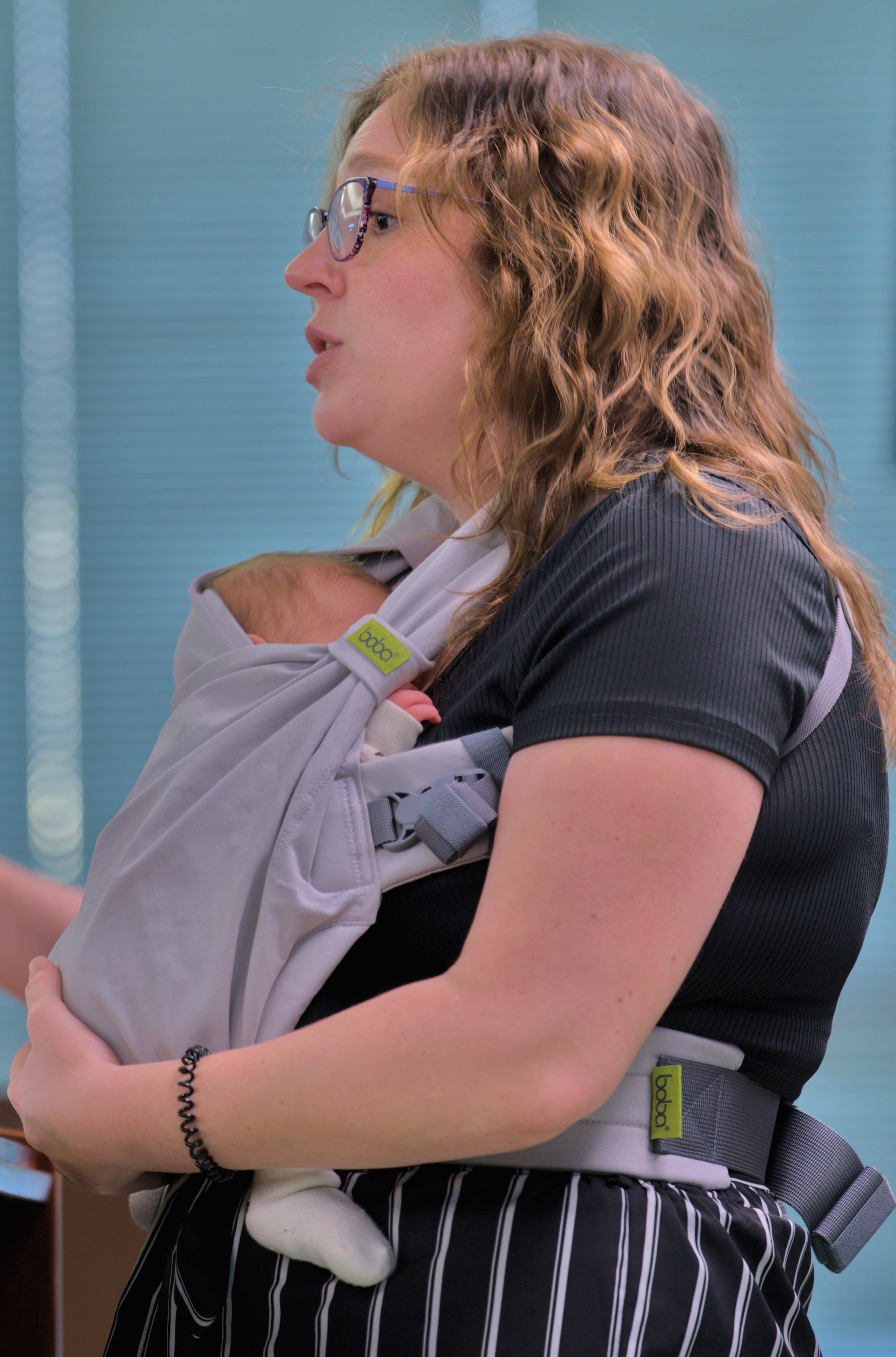
Chief Scarlette and Deputy Chief Dodd, said Caitlyn, had repeatedly visited with Chelsey Farley after her recovery. But Caitlyn wondered why the officers from the incident had not apologized to her sister, who was in attendance on Tuesday together with Trevor, a move which she said would display needed accountability on behalf of the city. “Because that’s what we asked for from you, [Mayor] Misty; and you spelled G-O-F-U-N-D-M-E for two minutes of your video. That’s all we got from you.”
Because Egan had completed his final shift at SPD that same night, Thursday September 5, his pension is protected from the medical expenses the crash inflicted upon Chelsey and Trevor. “Is that okay? That he spent 23 years as an officer, for your department, but got out to give life advice on how to be a good officer, after he smashed two people, thought it was okay to drink on the scene? Do you really think the punishment fits the crime?”
Merely expanding the police force and retraining the involved officers, Weiss said, would not fix institutional problems within the police force as an establishment. “You need better rules and regulations regarding whether people can even be an officer after DUI’s; criminal offenses, all the orders of protection from women that Mike Egan has on his record; other previous DUI’s that you can’t see on his record.”
Mr. Witkowski spoke to much of this as well. “All I can think of is, last week I passed by the bowling alley by me, a Black man on the sidewalk surrounded by four officers. Do you think I would have been allowed to approach in my truck, get out, and give that man some water? No. That’s a double standard.
“I want to congratulate Chief Scarlette: he has been trying to take accountability. You have to say that — he’s been trying to do what he can to hold officers responsible. Problem is, his hands are tied by union contracts and policies. Four of these officers got a slap on the wrist; letter in the file, retraining. That’s not accountability.”
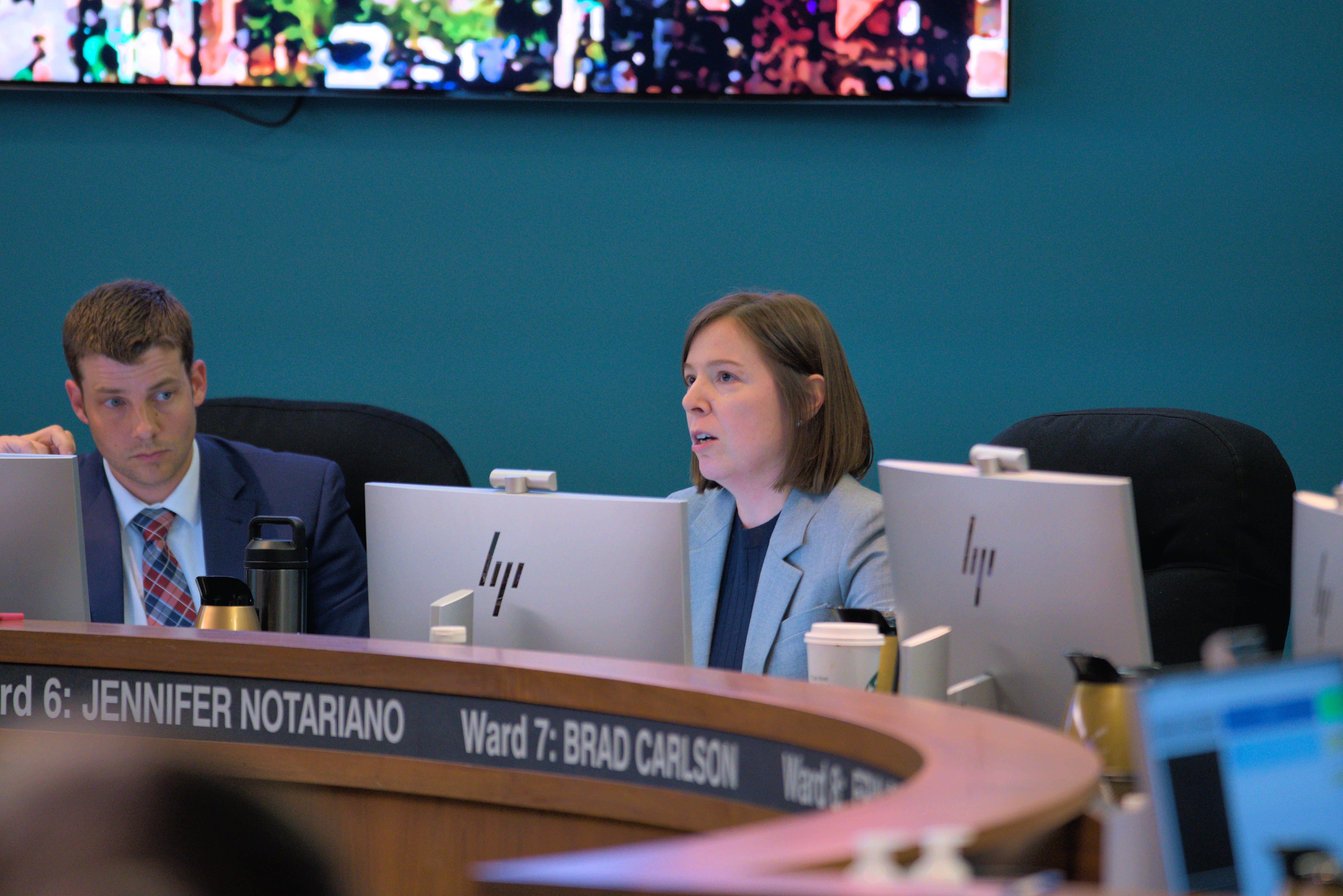
Near the end of the meeting, Ald. Notariano raised the subject of the University of Chicago Crime Lab’s Officer Support System: the OSS, according to the university’s webpage, “aims to identify patterns of officer behavior predictive of future misconduct, find officers currently displaying those behaviors, and intervene to provide support.” It is a data analysis project intended to help with human resource management, to circumvent potential abuse of authority risks.
“If we see that someone is having a hard time, an officer is having a hard time, we can pull them aside and give them special treatment – maybe reassign them, but target services to them, so that they are not going to be a danger to the public and themselves,” said Notariano. “I think that these are data points that we could certainly use to identify officers who need some positive intervention, in order to protect the City of Springfield, and frankly to protect themselves.”